
A Complete Guide to Solar Installation on Single-Ply PVC Roofs
For property owners in Oakland and across the East Bay, finding ways to reduce energy costs while maintaining a durable, weather-resistant property is a top priority. With the region's high utility rates and California's strict energy efficiency standards, transitioning to renewable energy is no longer just a trend—it's a smart financial decision. But before you can harvest the California sun, you need the right foundation.
If you own a building with a flat or low-slope roof, you might be wondering about the best way to integrate renewable energy without compromising your waterproofing. Combining solar energy systems with single-ply PVC roofing is one of the most effective solutions available today.
At Berkeley Roof Services, we understand that adding solar panels to your roof is a significant investment. You want to ensure that the process goes smoothly, that local building codes are met, and most importantly, that your roof remains completely watertight. In this guide, we will walk you through everything you need to know about preparing your flat roof for solar, the various mounting methods available, and how to protect your investment for decades to come.
The Perfect Foundation: Why PVC and Solar Make Sense
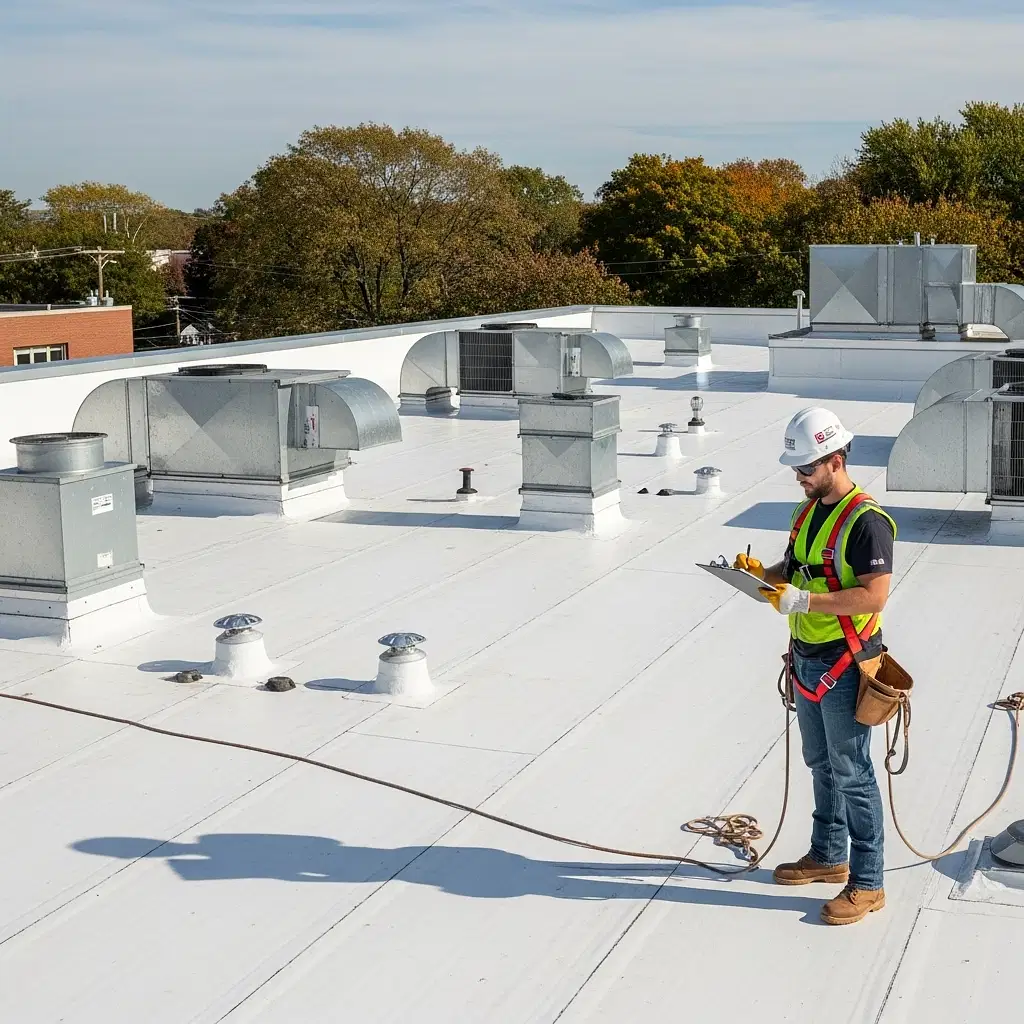
When figuring out how to install solar panels on pvc roof systems, the first thing to understand is why these two technologies work so well together. Single-ply PVC (polyvinyl chloride) is a premium roofing membrane known for its exceptional durability, chemical resistance, and longevity.
One of the biggest advantages of a PVC roof in our local market is its natural reflectivity. California's Title 24 mandates highly reflective "cool roofs" to combat urban heat islands and lower cooling demands. A bright white PVC roof easily meets these strict energy efficiency standards. When you install solar panels over a highly reflective cool roof, the panels actually perform better. Solar panels can lose efficiency when they get too hot; the reflective surface of the PVC keeps the ambient temperature around the panels lower, maximizing your energy output.
Furthermore, the lifespan of your roof should ideally match or exceed the lifespan of your solar array. Most modern solar panels are designed to last 25 to 30 years. A high-quality, professionally installed PVC roof boasts a similar lifespan. Installing new panels on an older, failing roof often leads to a costly situation where the panels must be completely removed and reinstalled just to facilitate a roof replacement down the line. By pairing a new PVC membrane with your solar project, you align their lifecycles perfectly.
Single Ply Roof Solar Panel Mounting Methods
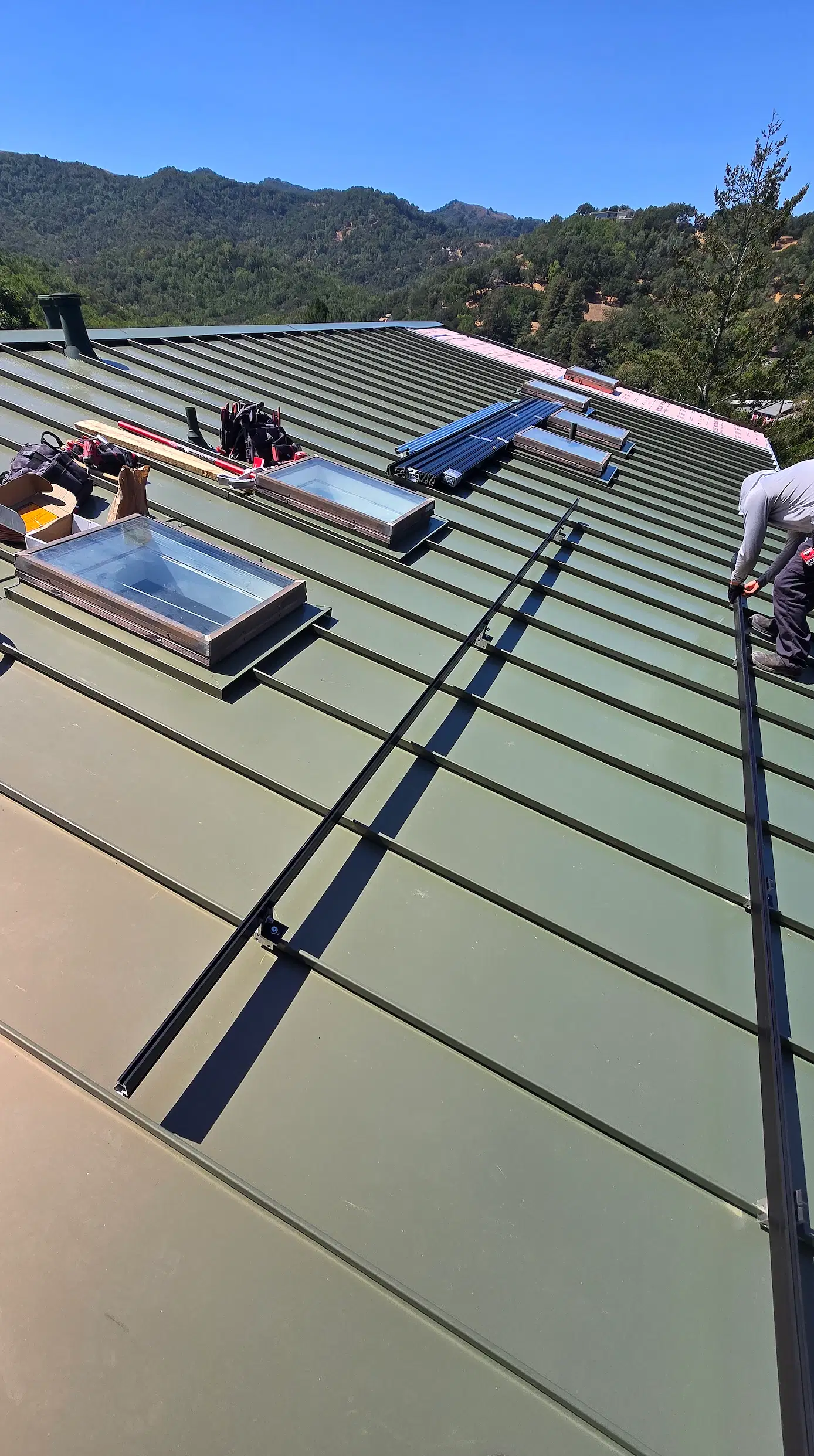
One of the most common concerns homeowners and facility managers have is whether installing solar will cause their roof to leak. The fear of roof water damage is valid, especially during our heavy rainy winter seasons. Fortunately, there are several highly secure single ply roof solar panel mounting methods designed specifically to keep your building watertight.
Ballasted Solar Rack Systems
Ballasted solar rack systems for flat roofs are incredibly popular because they require zero roof penetrations. Instead of drilling into the roof deck to secure the racking, the system is held in place by weight—typically concrete blocks placed in specially designed trays.
Because there are no holes created in the PVC membrane, the risk of leaks is virtually eliminated. However, ballasted systems do add significant weight to the structure. Before opting for a ballasted system, a structural engineer must verify that your building can support the additional dead load.
Mechanically Attached Systems
If your building cannot support the weight of a ballasted system, or if you live in an area prone to high winds or seismic activity, a mechanically attached system is used. This method involves securing the solar racks directly to the roof deck or structural framing.
While this does require penetrating the membrane, modern roofing technology makes it completely safe when done correctly. Specialized flashings, pitch pockets, or proprietary PVC-coated stanchions are used. Because the stanchions are coated in PVC, our technicians can heat-weld the roofing membrane directly to the mount, creating a seamless, watertight bond that is just as strong as the rest of the roof.
Protecting Commercial Flat Roof Membranes During Solar Installation
Whether you are updating a commercial facility or a modern residential home, protecting commercial flat roof membranes during solar installation is critical. Solar installers are experts in electrical wiring and panel optimization, but they aren't always roofing experts. Foot traffic, dropped tools, and dragging heavy metal racking across the roof can easily puncture a single-ply membrane.
To prevent damage, it is crucial to coordinate between your roofing contractor and your solar provider. When we oversee a solar integration, we take specific precautions:
- Slip Sheets: We install protective layers of membrane (slip sheets) under all racking components and ballast blocks to prevent chafing and wear over time.
- Walkway Pads: We recommend installing reinforced PVC walkway pads along the main routes to the inverters and panels. This protects the roof from the ongoing foot traffic required for routine solar maintenance.
- Pre- and Post-Inspections: We thoroughly inspect the roof before the solar team arrives and perform a comprehensive quality check after the installation is complete to ensure the watertight integrity remains flawless.
Navigating Local Requirements and Scheduling
Taking on a roof replacement and solar project in The Town requires careful planning. Between navigating complex local permitting processes, ensuring Title 24 compliance, and dealing with our unique microclimates, having an experienced local contractor is essential.
Many property owners try to rush these projects just before the rainy winter season hits. However, scheduling during the dry months allows for a smoother, safer installation process without unexpected cash flow gaps or sudden emergency tarping needs. We pride ourselves on offering transparent, detailed estimates with no hidden costs, so you know exactly what to expect from the permitting phase all the way to the final inspection.
If you are considering upgrading your property with solar energy, making sure your roof is ready for the transition is step one. A highly reflective, expertly installed PVC roof provides the perfect, durable platform for your new energy system.
Ready to maximize your home's energy efficiency and protect it for decades to come? The team at Berkeley Roof Services is here to help you navigate the entire process with confidence and transparency. Contact us today to schedule a comprehensive evaluation and learn how we can prepare your flat roof for a sustainable future.